
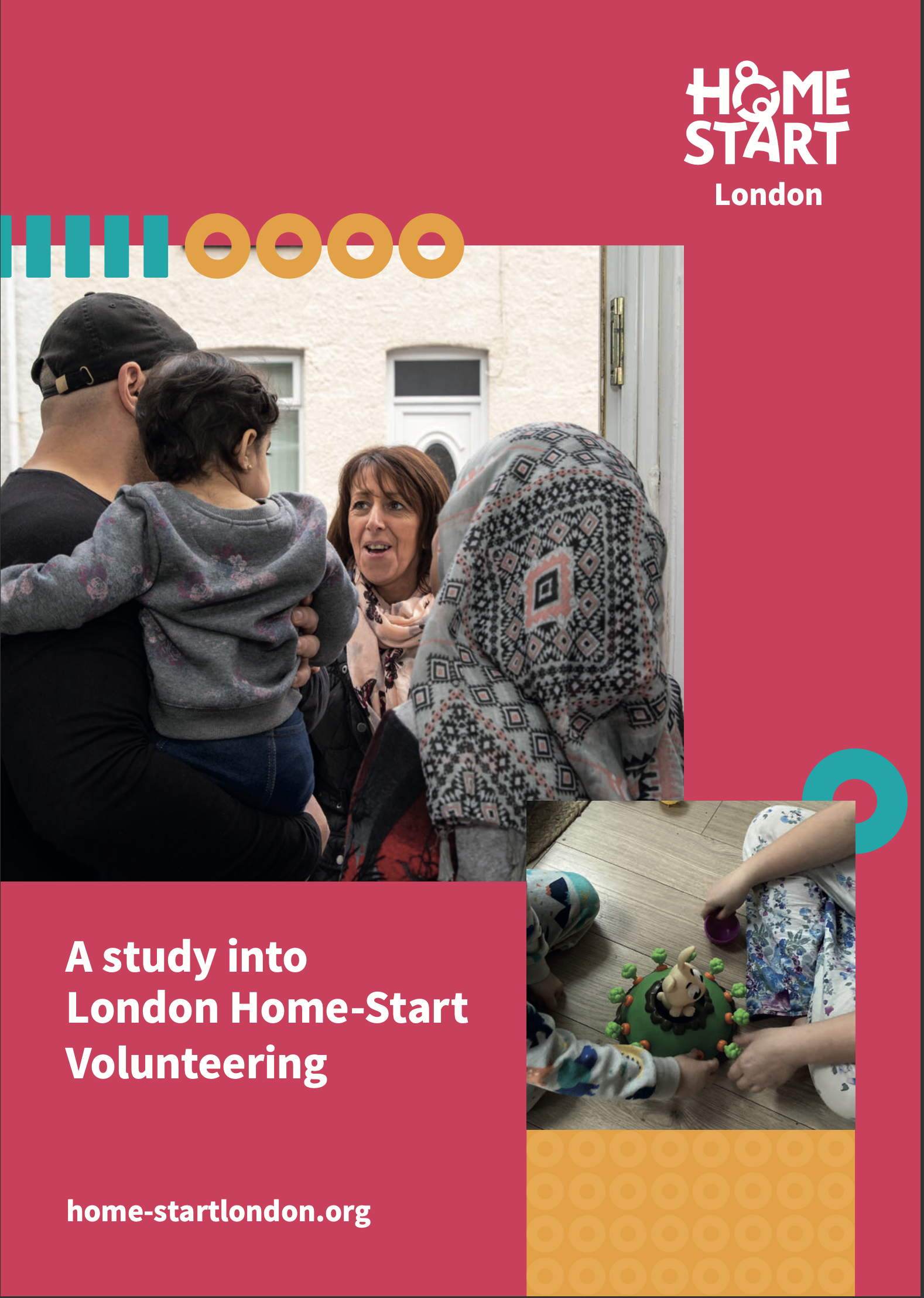
During the Covid-19 pandemic, there was a rise in the need for volunteers. From supporting food banks to doing pharmacy runs for neighbours, people volunteered in many ways to ensure the most vulnerable of us had what they needed. But what drives people to volunteer outside of these unprecedented circumstances? This was the question asked by Dr. Vimala Uttarkar when she undertook a study of volunteering across the London Home-Start network.
Dr. Uttarkar said, “I believe it is important to understand the process of becoming and being a volunteer to ensure that the volunteering experience is not only positive but also life-enhancing for the volunteer. In order to do this, we need to understand the personal qualities that enable people to volunteer, what sustains their role as a volunteer, and what contributes to people leaving their role as a volunteer. Furthermore, what external supports do they find useful and, finally, how their individual circumstances with regards to the Covid-19 pandemic have affected how they volunteer and how they have coped with it.”
London is a large city made up of 32 boroughs. The Office for National Statistics (ONS) reports that only 45% of the London population is white and 300 different languages are spoken. Although many families can communicate in English, there are pockets of the population with limited English communication skills meaning that some families find it difficult to interact with health and education services.
“Providing meaningful support to families with different spoken languages and cultures is a challenge, but Home-Start has established itself as an organisation at the forefront of providing much-needed help to families in the city,” Dr. Uttarkar states in her report.
As part of the study, volunteers from the Home-Start London consortium were invited to take part in the study. The remit of the study sought to understand:
- What motivates people to volunteer for Home-Start and in their community.
- The rewards from volunteering with Home- Start and positive outcomes for volunteers.
- The challenges of volunteering for Home-Start.
- The effect of the Covid pandemic on London Home-Start volunteers.
- What could be done to support the role of the volunteer in Home-Start.
Continue reading to learn more about the findings of the study.
We are grateful to Dr. Vimala Uttarkar for volunteering her time and skills to undertake the research, analysis and initial content for this report, and would like to thank her for the resulting report.